International Audience Reach
1,400,000 – 1,700,000
Meta Ad Manager · May 2026

Audience reach reflects foreign nationals active on Facebook and Instagram in and around Seoul, including residents, tourists, and visiting expats from nearby cities. Registered residents figure covers all nationalities.
Seoul is South Korea’s capital and largest city, home to approximately 265,544 registered foreign residents as of 2024. Around 73% of all expats in Korea live here. If you are arriving without a specific reason to go elsewhere, Seoul is where you will land.
What draws people is not one thing. Some come for English teaching, some for corporate roles, some for the startup scene. Most stay longer than they planned. The city is expensive by Korean standards, but the infrastructure for foreigners is the best in the country.
Yongsan-gu draws many expats because of Itaewon, Hannam-dong, embassies, and USFK (US Forces Korea). Mapo-gu draws students, creatives, and younger workers around Hongdae and Hapjeong. Gangnam-gu draws professionals who want clinics, offices, nightlife, and fast transport.
“Seoul can feel hard at first because everything moves fast. After two years, I stayed because each neighbourhood feels like a different city. You can build a routine here that fits your work, family, and social life.”
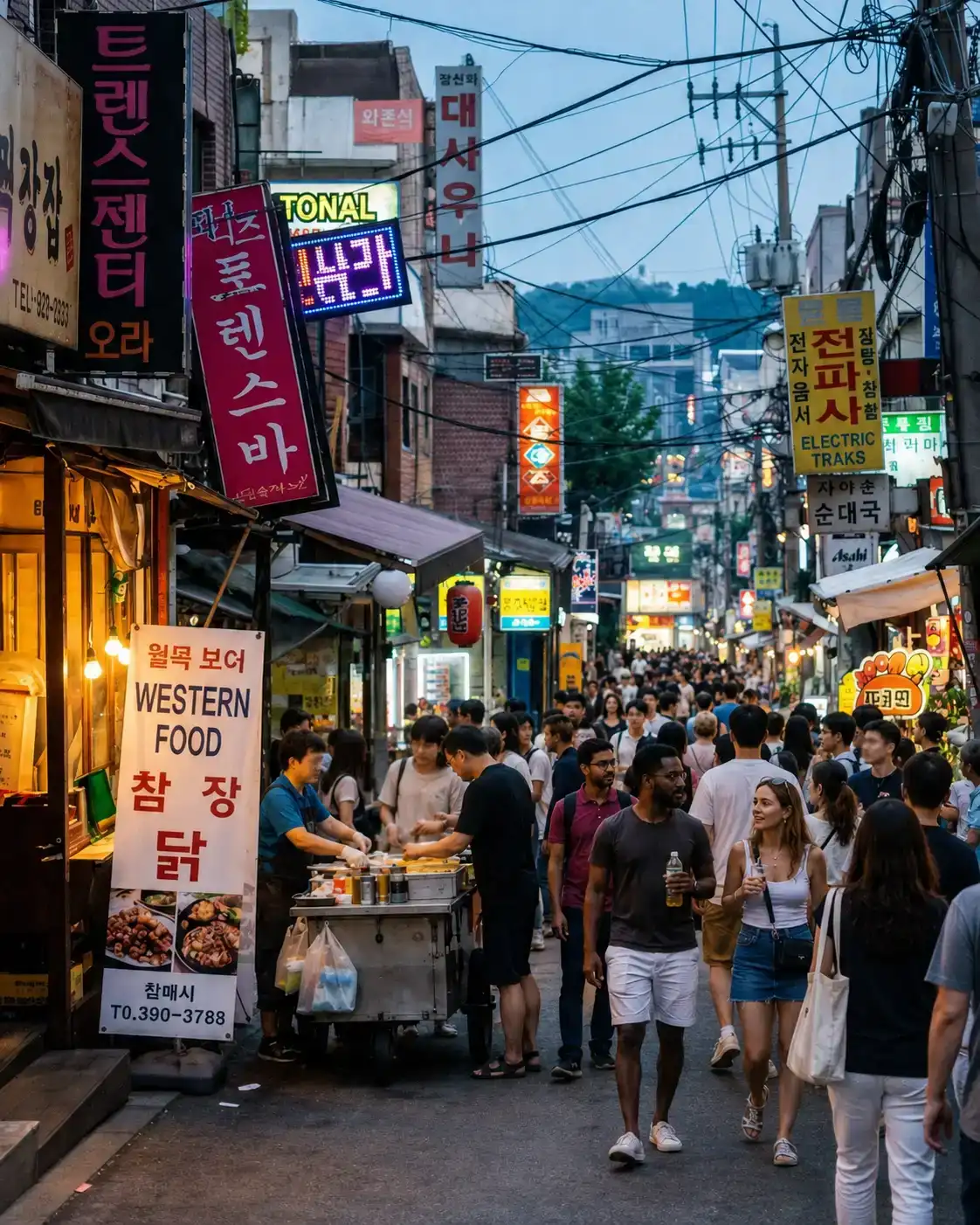
International, central, embassy-heavy
Rent: ₩900k – ₩1.6M+13,955 registered foreign residents
New arrivals who want English access
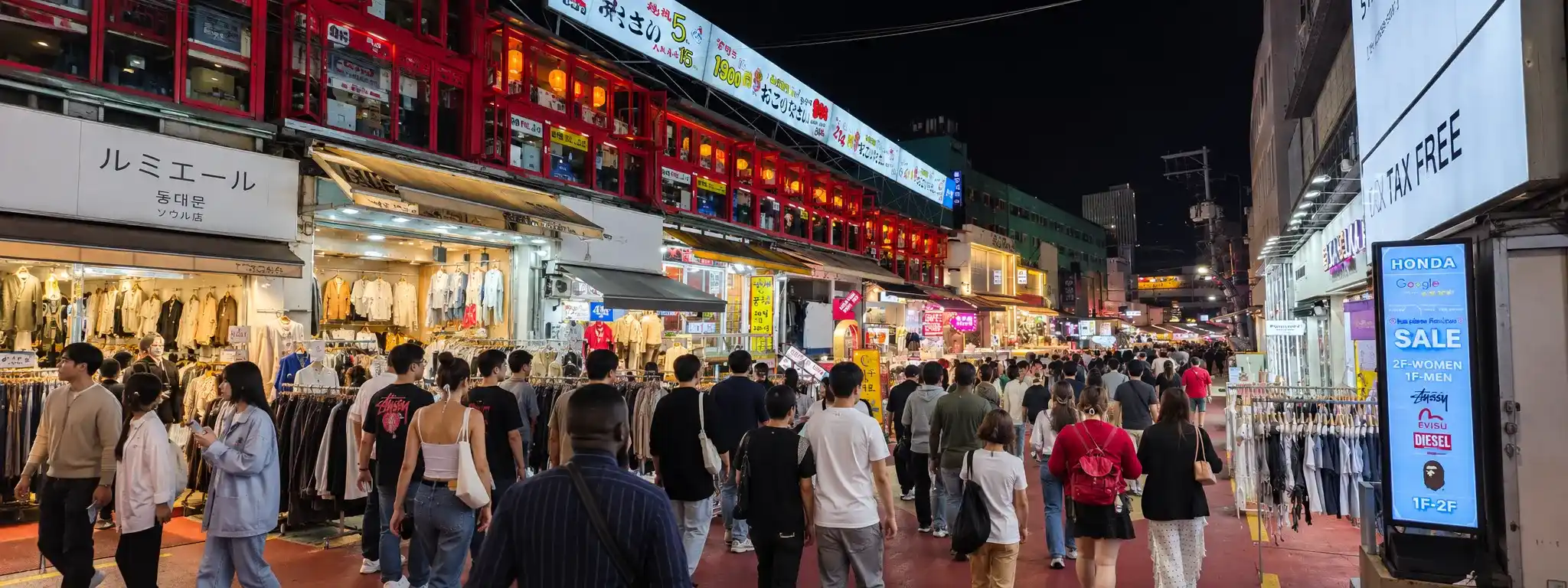
Younger, social, university-linked
Rent: ₩750k – ₩1.3M+11,465 registered foreign residents
Students, creatives, nightlife

Work-focused, service-rich, costly
Rent: ₩1000k – ₩1.8M+5,409 registered foreign residents
Professionals and clinic access
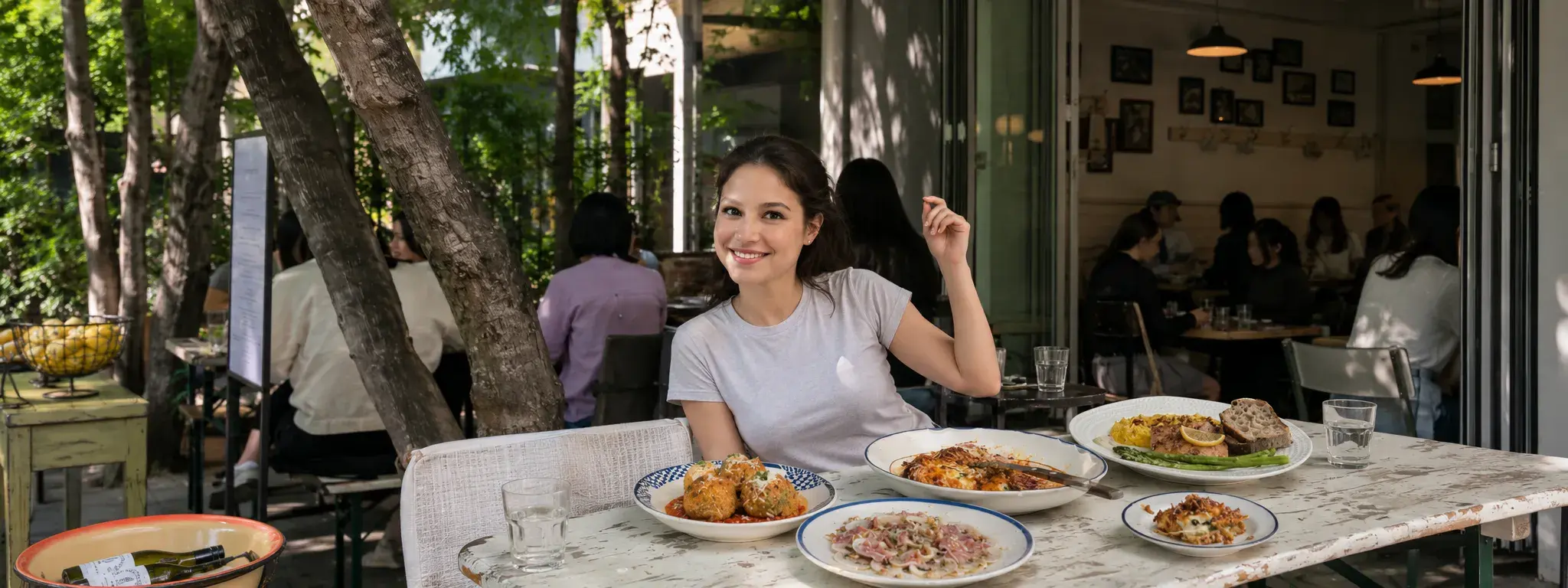
Design-led, cafe-heavy, rising fast
Rent: ₩850k – ₩1.5M+7,405 registered foreign residents
Remote workers and startup people
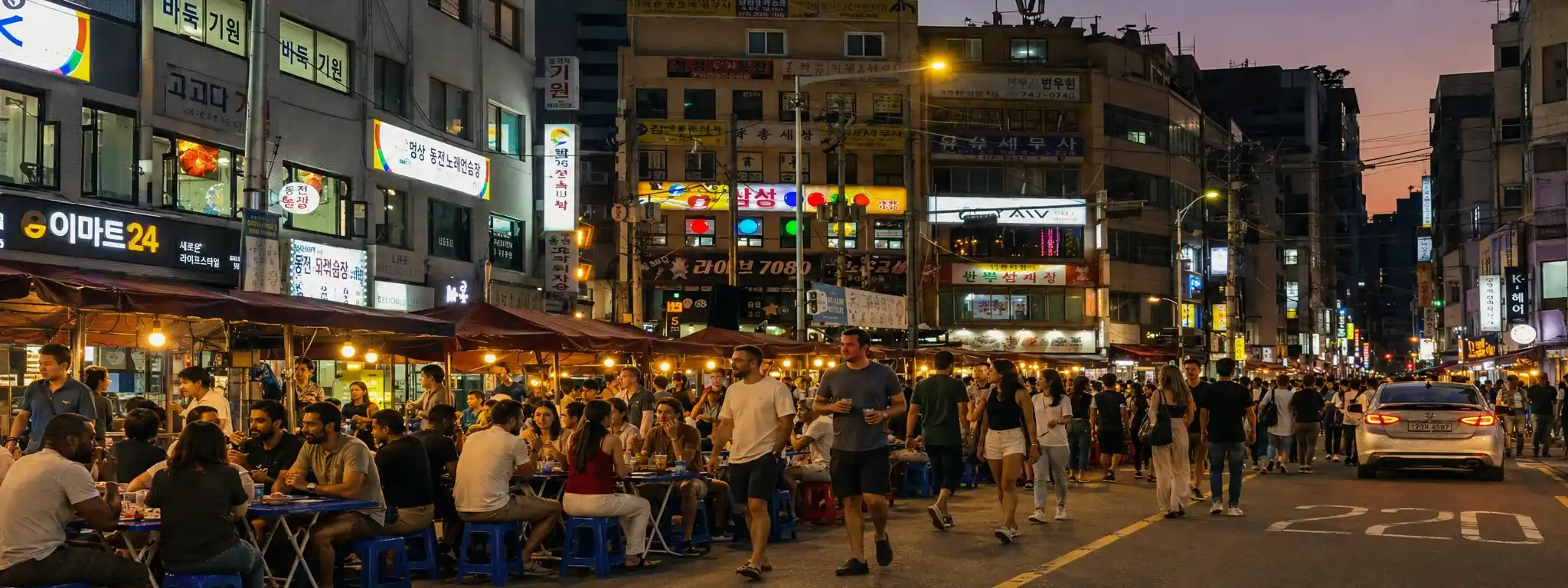
Central, older stock, walkable
Rent: ₩700k – ₩1.3M+11,036 registered foreign residents
Language students and culture access
Office-heavy, riverside, practical
Rent: ₩800k – ₩1.5M+23,006 registered foreign residents
Finance workers and commuters
Seoul costs more than any other Korean city, but less than Tokyo, Hong Kong, or most Western capitals. A single expat typically needs 1.7 million to 3.2 million KRW per month to cover rent, food, transport, phone, and basic social spending. Rent creates the biggest gap: a studio runs 700,000 to 1,600,000 KRW per month depending on district and building age. Jeonse (전세) is a lump-sum deposit rental system. Wolse (월세) means monthly rent with a smaller deposit.
Itaewon in Yongsan-gu gives the fastest access to English-speaking services, international food, embassies, foreign groceries, and people who understand common newcomer problems in Korea. For most first arrivals, it is the easiest starting point. Hongdae works better for younger expats and students. Gangnam works better for office workers, clinics, and private academies. Families often compare Yongsan, Hannam, Banpo, Seorae Village, and parts of Mapo.
Foreign nationals staying more than 90 days must register at the immigration office assigned to their Seoul district within that 90-day window. Seoul has three offices: Omokgyo (Yangcheon-gu), Seoul Southern (Magok, Gangseo-gu), and a Northern Seoul office. Your residential gu determines which one handles your case. Book through hikorea.go.kr. Bring your passport, visa documents, proof of address, one photo, and the fee.
Approximately 265,544 registered foreign residents live in Seoul, making it Korea's biggest expat base by far. EEIK's 110,000+ members make Seoul the easiest city for finding English-language advice, referrals, events, and local problem-solving. The community splits by work, nationality, neighbourhood, language, and life stage: teachers, students, military families, office workers, spouses, entrepreneurs, and long-term residents all have their own circles.
English works better in Seoul than in most Korean cities, but it does not work everywhere. Itaewon, Hongdae, Gangnam, major hotels, large hospitals, and tourist zones offer the strongest English support. Small restaurants, landlords, government offices, and local clinics may not offer English. Translation apps help, but basic Korean still saves stress. Hagwon (학원) means a private tutoring academy and many foreign teachers first arrive through hagwon jobs.
Studio apartments in Seoul usually cost 700,000 to 1,600,000 KRW per month. Cheaper units exist farther from central stations, while Gangnam, Hannam, Itaewon, and newer buildings can exceed that range. Deposits matter as much as monthly rent: many landlords ask for 5 million to 20 million KRW upfront. Bujongsan (부동산) means real estate agent. A local bujongsan can show listings that never appear online.
Seoul runs on subway, buses, taxis, and walking, with Lines 1 to 9, AREX airport rail, Shinbundang Line, and regional rail links. Most expats choose housing based on station access, not street address. Line 6 serves Itaewon, Line 2 serves Hongdae and Gangnam, and Line 5 serves Yeouido. T-money cards work on subway, buses, taxis, and many convenience store payments.
Severance Hospital, Samsung Medical Center, Asan Medical Center, Seoul National University Hospital, and Seoul St. Mary's Hospital all have international clinics with English-speaking staff. National Health Insurance (NHI) covers most registered long-term residents after enrollment. For smaller issues, neighbourhood clinics are faster. Pharmacies (yakguk) are common near subway stations.
Seoul feels safe for most foreigners compared with many large cities. Violent street crime is uncommon, but nightlife areas require normal caution around alcohol, phones, wallets, and late-night conflict. Scams usually involve housing, contracts, used goods, or unpaid work, so read documents carefully before signing. Women often report safer public transport than in many countries, though harassment can still happen near nightlife districts.
Buy a SIM at Incheon Airport immediately after landing. KT, SKT, and LG Uplus all have booths before the exit. Any carrier store in Itaewon, Gangnam, or Hongdae will sell prepaid and postpaid SIMs with a passport and Residence Card. Monthly plans start around 30,000 to 55,000 KRW for unlimited data. Tourists can use 30-day prepaid data SIMs without a Residence Card.
Most banks require a Residence Card, passport, and proof of address. KEB Hana Bank and Woori Bank are the most foreigner-accessible, with English-language staff at branches in Itaewon, Gangnam, and near major universities. IBK is commonly used by E-2 visa holders whose employers have accounts there. The process takes approximately 30 to 60 minutes if documents are complete.
The visa depends on why you are here. English teachers use E-2. Skilled workers use E-7. Job seekers use D-10. Long-term residents with Korean family use F-6 (marriage) or F-2 (extended residence). Permanent residents use F-5. Working holiday makers use H-1. Degree students use D-2. All visa applications are processed through the Korean embassy in your home country before arrival. Call 1345 for English-language immigration support.
116,569+ members
Striving to become the representative group to reflect the unique diversity and needs of Korea's expat community.
39,900+ members
Listings and advice for apartments, rooms, and housing in Seoul. Active community for renters and landlords.
30,740+ members
The go-to group for expats living in or moving to Seoul. Housing, jobs, advice, events, and local recommendations.

EEIK reaches up to 1,700,000 international visitors and residents in and around Seoul: through the main community (117,000+ members), curated groups, and a newsletter with 30,000+ subscribers. No other publisher in Korea offers this reach with this level of expat-audience focus.